
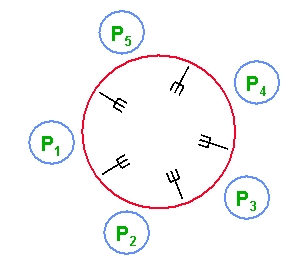
each of them:
take the fork on the left
take the fork on the right
eat for a while
puts both forks at the table
think for a while
| public
class Philosopher extends Thread{ Fork first, second; Philosopher(String name,Fork left, Fork right){ super.setName(name); first=left; second=right; start(); } public void run(){ for(int i=0;i<2;i++){ first.take(); System.out.println(getName()+" look for the second fork "); try { sleep((int)(Math.random()*2)); } catch (InterruptedException e){} second.take(); System.out.println(getName()+" eating "); try { sleep((int)(Math.random()*1000)); } catch (InterruptedException e){} System.out.println(getName()+" poses the forks - thinking"); first.pose(); second.pose(); try { sleep((int)(Math.random()*1000)); } catch (InterruptedException e1){} } System.out.println(getName()+" stop dinning"); } } |
public class Fork{ private boolean taken; private String name; Fork(String name){ taken = false; this.name=name; } public synchronized void take(){ while(taken){ System.out.println(Thread.currentThread().getName()+" waiting for "+name); try{ wait(); } catch(InterruptedException e){ System.err.println(e); } } System.out.println(Thread.currentThread().getName()+" take "+name); taken = true; } public synchronized void pose(){ taken = false; notify(); } public String toString(){ return name; } } |
public class Dinner{ public static void main(String arg[]){ int number=5; Fork fk[]= new Fork[number]; for(int i=0;i<number;i++){ fk[i]= new Fork("fork "+i); } for(int i=0; i<number;i++){ new Philosopher("P"+(i+1),fk[i],fk[(i+1)%number]); } } } |
The most often used approach to avoid circular waiting is to impose total ordering of all resource types. Each thread requests resources in ascending order of enumeration. Thus, if there exists an ordered list of n resources {r1,r2,..rn} and a thread requires resources ri and ri+j (j>0) to accomplish a task, it must first request ri then ri+j.
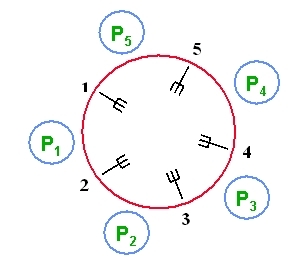
A second possible approach is based on thread "tolerance". A thread must ensure that it automatically releases all currently held resources if the newly requested resource is not available. When the philosopher notices that the fork is not free (an exception is generated) he withdraws, leaving the forks for a certain time before trying to take them again.
public class TakenExc extends Exception{ private static final long serialVersionUID = 1L; } |
public class Philosopher extends Thread{
public class Fork{
public class Dinner{
|