
Thread Synchronization
Resource sharing without synchronization
In a producer - consumer relationship, a producer thread calls a producer method which deposits a sequence of numbers (let's use 1, 2, 3, ...) into a shared memory area (buffer). The consumer thread reads this data:
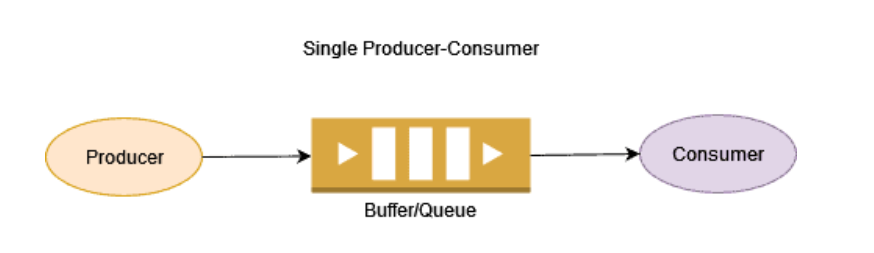
Potential risks:
1.Both the producer and the consumer may attempt to update the
buffer contents simultaneously. This can lead to data loss or
inconsistencies.
2.The producer might be slower than the consumer, potentially
reading the same value multiple times.
3.The consumer might be slower than the producer, potentially
losing generated values.
| class
IntToShare { private int intShared = -1; public void setIntShared( int val ){ //used by Producer System.out.println( Thread.currentThread().getName() + " set intShared " + val ); intShared = val; } public int getIntShared(){ // used by Consumer System.out.println( Thread.currentThread().getName() + " get intShared " + intShared ); return intShared; } } class Producer extends Thread { private IntToShare pGarde; public Producer( IntToShare h ){ super( "Producer" ); pGarde = h; } public void run(){ for ( int counter = 1; counter <= 10; counter++ ) { // sleep for random time. try {Thread.sleep( (int) ( Math.random() * 30 ) );} catch( InterruptedException e ) { System.err.println( e.toString() ); } pGarde.setIntShared( counter ); } System.out.println( getName() + " is finish" ); } } class Consumer extends Thread { private IntToShare cGarde; public Consumer( IntToShare h ){ super( "Consumer" ); cGarde = h; } public void run(){ int val, sum = 0; do { // sleep for a random time. try {Thread.sleep( (int) ( Math.random() * 50 ) );} catch( InterruptedException e ) { System.err.println( e.toString() ); } val = cGarde.getIntShared(); sum += val; } while ( val != 10 ); System.out.println( getName() + " read values whose total sum is:" + sum); } } public class SharedCell { public static void main( String args[] ){ IntToShare h =new IntToShare(); Producer p = new Producer( h ); Consumer c = new Consumer( h ); p.start(); c.start(); } } |
Consumer
get intShared -1 Producer set intShared 1 Consumer get intShared 1 Producer set intShared 2 Consumer get intShared 2 Producer set intShared 3 Producer set intShared 4 Producer set intShared 5 Consumer get intShared 4 Consumer get intShared 5 Producer set intShared 6 Producer set intShared 7 Consumer get intShared 7 Producer set intShared 8 Producer set intShared 9 Producer set intShared 10 Producer is finish Consumer get intShared 10 Consumer read values whose total sum is:29 |
Java uses so-called "monitors" to ensure synchronization. The monitor represents an object that allows a single thread at a time to execute a method or block of code. This is accomplished by locking the object when invoking the method or block of code.
public synchronized int method1{
...
}
or a block of code
synchronized(objet)
while(...) {
...
}
notify() / notifyAll();
Producer - consumer with synchronization:
| class IntToShare { private int intShared = -1; private boolean writable= true; public synchronized void setIntShared( int val ){ while(!writable) { try{ wait(); } catch(InterruptedException e){ System.err.println(e); } } System.out.println( Thread.currentThread().getName() + " set intShared " + val ); intShared = val; writable = false; notify(); } public synchronized int getIntShared(){ while(writable) { try{ wait(); } catch(InterruptedException e){ System.err.println(e); } } System.out.println( Thread.currentThread().getName() + " get intShared " + intShared ); writable = true; notify(); return intShared; } } |
Producer
set intShared 1 Consumer get intShared 1 Producer set intShared 2 Consumer get intShared 2 Producer set intShared 3 Consumer get intShared 3 Producer set intShared 4 Consumer get intShared 4 Producer set intShared 5 Consumer get intShared 5 Producer set intShared 6 Consumer get intShared 6 Producer set intShared 7 Consumer get intShared 7 Producer set intShared 8 Consumer get intShared 8 Producer set intShared 9 Consumer get intShared 9 Producer set intShared 10 Producer is finish Consumer get intShared 10 Consumer read values whose total sum is:55 |
Several producers and consumers
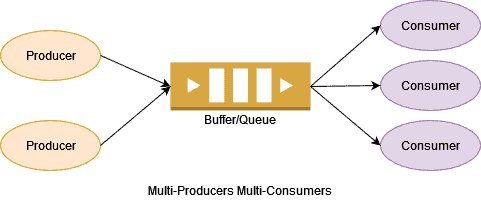
A consumer must finish when all producers have finished and there is no product value (no active producers). Exception to finish. “Timed waiting” so as not to miss the termination of the last producer.
| class
IntToShare { private int intPartage = -1; private int nomP =0; private boolean writable= true; public synchronized void incP(){ nomP++; } public synchronized void decP(){ nomP--; } public synchronized void setIntPartage( int val ){ while(!writable) { System.out.println("\t"+Thread.currentThread().getName()+" waiting"); try{ wait(); } catch(InterruptedException e){ System.err.println(e); } } System.out.println( Thread.currentThread().getName() + " produce intPartage " + val ); intPartage = val; writable = false; notifyAll(); } public synchronized int getIntPartage() throws NoP{ while(writable) { if(nomP==0) throw new NoP() ; System.out.println("\t"+Thread.currentThread().getName()+" waiting"); try{ wait(1000); } catch(InterruptedException e){ System.err.println(e); } } System.out.println( Thread.currentThread().getName() + " get intPartage " + intPartage ); writable = true; notifyAll(); return intPartage; } } //----------------------------------------------------------------------------- class Producer extends Thread { private IntToShare pGarde; public Producer( IntToShare h ){ super( "Producer " +(int)(Math.random()*1000)); pGarde = h; } public void run(){ pGarde.incP(); System.out.println( getName() + " starting" ); for ( int counter = 1; counter <= 4; counter++ ) { // sleep for random time. try {Thread.sleep( (int) ( Math.random() * 3000 ) );} catch( InterruptedException e ) { System.err.println( e.toString() ); } pGarde.setIntPartage( counter ); } pGarde.decP(); System.out.println( getName() + " finished" ); } } //----------------------------------------------------------------------------- class Consumer extends Thread { private IntToShare cGarde; public Consumer( IntToShare h ){ super( "Consumer "+(int)(Math.random()*1000) ); cGarde = h; } public void run(){ System.out.println( getName() + " starting" ); int val; do { try {Thread.sleep( (int) ( Math.random() * 1000 ) );} catch( InterruptedException e ) { System.err.println( e.toString() ); } try{ val = cGarde.getIntPartage(); }catch (NoP exc){ break; } System.out.println("\t\t"+this.getName()+" has read the value "+val); } while ( true ); System.out.println( getName() + " finished"); } } //---------------------------------------------------------------------------- class NoP extends Exception{ private static final long serialVersionUID = 1L; NoP(){ System.out.println("Exception NoP thrown"); } } //--------------------------------------------------------------------------- public class SharedCellM { public static void main( String args[] ){ IntToShare h =new IntToShare(); for(int i=0;i<2;i++){ (new Producer( h )).start(); } System.out.println("All Producer started by: "+ Thread.currentThread().getName()); for(int i=0;i<3;i++){ (new Consumer(h)).start(); } System.out.println("Thread "+Thread.currentThread().getName()+" finished"); } } |
Producer
860 starting Producer 711 starting Producer 74 starting All Producer started by: main Thread main finished Consumer 771 starting Consumer 964 starting Consumer 771 waiting Consumer 964 waiting Consumer 771 waiting Consumer 964 waiting Producer 711 produce intShared 1 Consumer 771 get intShared 1 Consumer 771 has read the value 1 Consumer 964 waiting Producer 860 produce intShared 1 Consumer 964 get intShared 1 Consumer 964 has read the value 1 Producer 74 produce intShared 1 Consumer 771 get intShared 1 Consumer 771 has read the value 1 Consumer 964 waiting Consumer 771 waiting Consumer 964 waiting Producer 860 produce intShared 2 Consumer 771 get intShared 2 Consumer 771 has read the value 2 Consumer 964 waiting Producer 711 produce intShared 2 Consumer 964 get intShared 2 Consumer 964 has read the value 2 Consumer 771 waiting Producer 711 produce intShared 3 Consumer 771 get intShared 3 Consumer 771 has read the value 3 Consumer 964 waiting Consumer 771 waiting Consumer 964 waiting Producer 74 produce intShared 2 Consumer 771 get intShared 2 Consumer 771 has read the value 2 Consumer 964 waiting Consumer 771 waiting Producer 711 produce intShared 4 Producer 711 finished Consumer 964 get intShared 4 Consumer 964 has read the value 4 Consumer 771 waiting Producer 74 produce intShared 3 Consumer 771 get intShared 3 Consumer 771 has read the value 3 Consumer 964 waiting Producer 74 produce intShared 4 Producer 74 finished Consumer 964 get intShared 4 Consumer 964 has read the value 4 Consumer 771 waiting Producer 860 produce intShared 3 Consumer 771 get intShared 3 Consumer 771 has read the value 3 Consumer 964 waiting Consumer 771 waiting Consumer 964 waiting Consumer 771 waiting Producer 860 produce intShared 4 Producer 860 finished Consumer 964 get intShared 4 Consumer 964 has read the value 4 Exception NoP thrown Consumer 771 finished Exception NoP thrown Consumer 964 finished |
Exercise -